Hiking Iceberg Lake in Glacier National Park: A Complete Guide
Few trails in Glacier National Park capture the essence of its raw, untamed beauty quite like the trek to Iceberg Lake in Glacier National Park. This incredibly popular hike offers a journey through prime wildlife habitat, past cascading waterfalls, and culminates in a breathtaking glacial cirque where icebergs often float well into midsummer. If you're planning a visit to this iconic destination, prepare for an unforgettable adventure. This comprehensive guide will equip you with everything you need to know to experience the magic of Iceberg Lake.
Getting There & Starting Your Iceberg Lake Adventure
The journey to Iceberg Lake begins in the scenic Many Glacier area, specifically from a trailhead situated just behind the cabins of the Swiftcurrent Motor Inn. As one of the park's most sought-after trails, especially during peak season, early arrival is not just recommended, it's virtually essential. The dedicated parking lot near the trailhead is quite small, accommodating only about 12-15 vehicles. If you arrive to find it full – a common occurrence – you'll need to park in the larger lot in front of the Swiftcurrent Motor Inn. Be prepared for an additional walk of approximately two-tenths of a mile to reach the official trailhead, a small price to pay for such spectacular scenery. For more detailed parking strategies and navigation tips, consult our guide: Iceberg Lake Trail: Parking, Bear Safety, and Views in Glacier.
From the Iceberg Lake Trailhead, your hike begins with an immediate right turn at a junction, leading you onto a short connector trail. This segment offers a brisk warm-up, gaining roughly 185 feet in elevation over just a quarter of a mile, making for a fairly steep initial climb. Don't be discouraged, as this is one of the trail's steeper sections. Once you connect with the main Ptarmigan Trail, the grade becomes noticeably more moderate, allowing for a more comfortable ascent. Remember to turn left at the Ptarmigan Trail junction; a right turn would lead you down towards the historic Many Glacier Hotel.
A Tapestry of Panoramic Vistas and Varied Terrain
As you progress along the initial sections of the Ptarmigan Trail, you'll be treated to a visual feast. The open terrain provides grand, commanding views that stretch across the landscape. Towards the southwest, the majestic forms of 8851-foot Mount Grinnell and 8436-foot Swiftcurrent Mountain dominate the skyline. Looking directly west, the impressive 9321-foot Mount Wilbur stands as a formidable backdrop, its rugged profile a constant companion. As you head northwest, the Ptarmigan Wall, a prominent geological feature, looms large in the direction of your hike.
The trail, a moderate ascent with a total elevation gain of about 1200 feet over its 4.8-mile length (one way), mostly maintains a gradual incline, making it accessible for hikers in fair physical condition. After about 1.5 miles from the trailhead, the trail transitions from open, expansive vistas into the soothing shade of a fairly dense pine forest, offering a welcome change of scenery and often a slightly cooler environment.
Around the 2.5-mile mark, you'll reach a small clearing that provides a picturesque overlook of Ptarmigan Falls. While the terrain prevents a closer approach for a full top-to-bottom view, this is the best vantage point you'll get of the cascading water. Just above the falls, an open and rocky area has become a popular spot for hikers to pause, enjoy a snack, or simply rest their legs amidst the stunning surroundings. Shortly after passing the falls, you'll cross a charming footbridge over Ptarmigan Creek. Roughly a tenth of a mile further, you'll arrive at the crucial Iceberg Lake Trail junction, where the Ptarmigan Trail continues right towards Ptarmigan Lake, while your path to Iceberg Lake veers left.
Navigating Bear Country & Embracing Wildlife Encounters
The Many Glacier area, particularly along the Ptarmigan Trail corridor leading to Iceberg Lake in Glacier National Park, is renowned as prime grizzly bear habitat. The first mile or so past the connector trail is especially active with these magnificent creatures. Many seasoned hikers report spotting at least one bear along the hillsides during their visits. This makes bear safety an absolutely non-negotiable aspect of your hike. It is paramount to make plenty of noise as you walk, especially around blind corners or dense vegetation, to avoid surprising a bear. Carrying bear spray and knowing how to properly use it is not just recommended, it's a vital safety measure for anyone exploring Glacier's backcountry.
Beyond bears, the area is teeming with other wildlife. You might catch a glimpse of mountain goats or bighorn sheep on the high cliffs, or even moose browsing in the valleys below. One memorable encounter involved a cow moose and her calf feeding peacefully in the valley; later that day, the same pair ambled up the trail, requiring hikers to carefully scramble uphill to give them a wide berth as they casually strolled by. Always remember to give wildlife ample space and never approach them. Observe from a safe distance, appreciating these creatures in their natural environment. For more in-depth information on safely encountering wildlife in Glacier, read our dedicated article: Iceberg Lake Hike: Witness Glacial Beauty & Wildlife in GNP.
The Unforgettable Destination: Iceberg Lake Itself
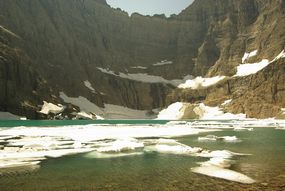
The culmination of your efforts is the spectacular Iceberg Lake, nestled within a dramatic high cirque. This glacial basin, carved by the immense power of Pleistocene ice, is framed by towering, snow-dusted walls that rise more than 3,000 feet above the water. The colossal presence of Mount Wilbur, composed of ancient Belt Supergroup rocks, serves as an awe-inspiring backdrop, completing a scene of raw, geological grandeur.
What makes this destination truly unique and gives Iceberg Lake in Glacier National Park its name are the icebergs that often linger on its surface well into midsummer. Fed by the frigid meltwater of surrounding glaciers and snowfields, these floating chunks of ice create a surreal, ethereal landscape, even on the warmest of days. Depending on the time of year and recent temperatures, you might witness dozens of icebergs, varying in size, slowly drifting across the pristine turquoise waters.
While the lake is stunning at any time of day, the late afternoon light can be particularly dramatic, illuminating the west-facing cirque walls with a warm, golden glow, perfect for photography. The best time to experience Iceberg Lake is typically from mid-June through October, though it's important to note that park roads and facilities are usually fully open by mid-July. Visiting in late July or August offers the highest likelihood of seeing abundant icebergs while enjoying optimal weather conditions.
Essential Tips for Your Iceberg Lake Adventure
- Best Time to Hike: Aim for late July through September. While accessible from mid-June, earlier in the season may mean more snow on the trail and fewer visible icebergs due to fresh melt.
- Crowd Management: This is an extremely popular trail. To avoid the heaviest crowds and secure parking, start your hike as early as possible – think sunrise!
- What to Pack:
- Layers: Mountain weather is unpredictable. Bring a base layer, a fleece or insulated jacket, and a waterproof outer shell.
- Water & Snacks: Carry plenty of water (at least 2-3 liters per person) and high-energy snacks.
- Bear Spray: Always carry it and know how to use it.
- Sun Protection: Sunscreen, sunglasses, and a hat are crucial, especially on exposed sections.
- Sturdy Footwear: Hiking boots or sturdy trail shoes with good ankle support are recommended.
- Camera: You'll want to capture the unparalleled beauty.
- Leave No Trace: Pack out everything you pack in. Stay on designated trails, respect wildlife, and leave the natural environment as you found it for future generations to enjoy.
- Physical Fitness: While mostly gradual, the 1200-foot elevation gain over 4.8 miles (one way) requires a moderate level of fitness. Prepare with some regular exercise beforehand.
A hike to Iceberg Lake in Glacier National Park is more than just a walk in the woods; it's an immersive journey into the heart of one of North America's most magnificent wild places. From the initial climb and panoramic mountain vistas to the awe-inspiring glacial lake brimming with floating ice, every step promises a memory in the making. Prepare well, respect the wild, and get ready for an adventure that will undoubtedly be a highlight of your Glacier National Park experience.
