Conquering the Iceberg Lake Trail: Your Ultimate Guide to Parking, Bear Safety, and Unforgettable Views in Glacier National Park
Nestled deep within the breathtaking Many Glacier valley, the Iceberg Lake Trail stands as one of Glacier National Park's most iconic and rewarding day hikes. Drawing thousands of adventurers annually, this trek promises not only a workout but also an unparalleled encounter with the raw, untamed beauty of the Rockies. The destination, Iceberg Lake in Glacier National Park, is a glacial marvel where towering peaks encircle a pristine, turquoise lake often dotted with floating icebergs well into summer. But before you set out to experience this natural wonder, understanding the practicalities of parking, the critical importance of bear safety, and what stunning views await you is paramount. For a more comprehensive look at planning your adventure, check out our Hiking Iceberg Lake in Glacier National Park: A Complete Guide.
Navigating the Trailhead and Parking Realities
Your journey to Iceberg Lake officially commences near the charming Swiftcurrent Motor Inn in the Many Glacier area. This picturesque starting point, set against a backdrop of majestic mountains, is where your adventure truly begins. The trailhead itself is discreetly located behind the cabins adjacent to the inn.
Parking Considerations: Be warned, the popularity of the Iceberg Lake Trail means parking can be a significant challenge, especially during peak season (mid-July through August). The primary lot directly next to the trailhead is quite small, accommodating only about 12-15 vehicles. It fills up incredibly fast, often before sunrise. If you arrive to a full lot, don't despair; ample overflow parking is available in front of the Swiftcurrent Motor Inn. However, this will add an extra two-tenths of a mile to your initial walk to reach the trailhead, a small price to pay for such an epic hike.
The First Steps: Once you find parking and make your way to the trailhead, you'll immediately encounter a junction. Here, you'll turn right, embarking on a short but relatively steep connector trail. This segment quickly gains approximately 185 feet in elevation over just a quarter of a mile. While a good warm-up for your legs, the grade soon mellows as you merge onto the famous Ptarmigan Trail. At this next junction, a crucial turn to the left keeps you on track towards Iceberg Lake; turning right would lead you down to the historic Many Glacier Hotel, a detour you'll want to avoid if Iceberg Lake is your primary goal.
Wildlife Encounters and Essential Bear Safety
The Many Glacier area, particularly along the Ptarmigan Trail corridor that leads to Iceberg Lake in Glacier National Park, is renowned for being prime habitat for wildlife, most notably grizzly bears. The first mile or so past the initial connector trail is a particularly active zone for these magnificent animals, making bear safety an absolute non-negotiable.
- Make Noise: This is your primary defense. Hike in groups, talk loudly, sing, or clap at regular intervals, especially when navigating blind corners, dense vegetation, or areas near streams where your sound might be muffled.
- Carry Bear Spray: Always carry EPA-approved bear spray and know how to use it. It should be easily accessible, not buried in your backpack. Attend a ranger talk or watch a demonstration before your hike if you're unfamiliar with its deployment.
- Stay Alert: Keep an eye out for fresh tracks, scat, or disturbed vegetation. Scan your surroundings frequently.
- Keep Your Distance: If you spot a bear, give it plenty of space (at least 100 yards for grizzlies, 25 yards for black bears and other wildlife like moose). Never approach or feed wildlife.
- Moose Encounters: While bears often get the most attention, other animals like moose can also be unpredictable. We've witnessed a cow moose and her calf leisurely strolling up the trail, requiring hikers to scramble off the path to avoid a close encounter. Always respect their space and give them a wide berth. For more insights on spotting wildlife and staying safe, read our Iceberg Lake Hike: Witness Glacial Beauty & Wildlife in GNP.
By diligently practicing these safety measures, you significantly reduce the risk of an adverse wildlife encounter and enhance your chances of a memorable and safe journey.
The Journey's Beauty: Trail Highlights and Unforgettable Views
The hike to Iceberg Lake in Glacier National Park is a continuous feast for the eyes, offering an evolving tapestry of landscapes. The early sections of the Ptarmigan Trail traverse open terrain, presenting grand, commanding vistas of the surrounding peaks. To your southwest, behold the impressive 8851-foot Mount Grinnell and the 8436-foot Swiftcurrent Mountain. Dominating the western horizon is the formidable 9321-foot Mount Wilbur, while the jagged Ptarmigan Wall stretches out to the northwest, guiding your direction.
As you progress, roughly 1.5 miles from the trailhead, the landscape transitions. The open, panoramic views give way to the cooling shade of a fairly dense pine forest, offering a different kind of beauty and a brief respite from the sun.
Ptarmigan Falls: Around the 2.5-mile mark, you'll reach a small clearing that offers a glimpse of Ptarmigan Falls. While the view from here is the best you'll get due to the steep, challenging terrain and obscuring trees, it's still a picturesque stop. Just above the falls, an open, rocky area has become a popular spot for hikers to take a well-deserved snack or rest break, soaking in the mountain air.
Soon after passing the falls, you'll cross a charming footbridge over Ptarmigan Creek. Approximately a tenth of a mile further, you'll reach another critical junction – the Iceberg Lake Trail junction. Here, you'll turn left to head directly to Iceberg Lake. The Ptarmigan Trail continues to the right, leading hikers further up to Ptarmigan Lake, another stunning destination for those seeking an extended adventure.
The Pristine Grandeur of Iceberg Lake
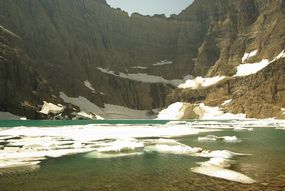
The final reward of your trek is the magnificent Iceberg Lake in Glacier National Park itself. Perched in a dramatic, high cirque, its surface often reflects the imposing 9321-foot Mount Wilbur and the snow-dusted walls that cradle it. This glacial cirque lake, carved by the colossal Pleistocene ice sheets, is continually fed by icy glacier melt, which explains why impressive icebergs can linger on its surface well into midsummer, creating an otherworldly, ethereal scene. The surrounding peaks, built from ancient Belt Supergroup rocks, soar more than 3,000 feet above the water, amplifying the sense of awe and isolation.
Despite its remote feel, the Iceberg Lake Trail is incredibly popular, and for good reason. The entire 4.8-mile (one-way) trek, with its 1200 feet of elevation gain, is surprisingly manageable. While there are a few steeper sections, the trail generally maintains a gradual incline, making it "relatively painless" for hikers in fair physical condition. The best time to experience this wonder is typically from mid-June through October, with all park roads and facilities fully operational by mid-July. For photographers, the dramatic morning light on the west-facing cirque or the late afternoon glow can be particularly spectacular.
Conclusion
The Iceberg Lake Trail is more than just a hike; it's an immersive experience into the heart of Glacier National Park's untamed wilderness. From navigating parking challenges and diligently practicing bear safety to marveling at panoramic mountain vistas and finally reaching the iconic, iceberg-laden waters of Iceberg Lake in Glacier National Park, every step of this journey is etched with unforgettable moments. Prepare adequately, respect the wild, and you'll be rewarded with memories that will last a lifetime.
